Proof Over Paper: Why Demonstrable Work Is Outpacing Degrees in the Modern Hiring Market

Photo: Justin De La Ornellas from China Town, Hawaii, CC BY 2.0, via Wikimedia Commons
For decades, the professional development playbook in the United States followed a predictable sequence: earn a degree, accumulate credentials, and let those qualifications do the persuading. Graduate programs, in particular, carried an almost talismanic authority. An MBA from a recognized institution was widely understood to signal competence, ambition, and readiness for leadership.
That signal is weakening — and faster than most professionals realize.
This is not an argument against education. It is, however, an honest examination of a growing disconnect between what formal credentials promise and what modern employers actually verify. Understanding that gap is the first step toward building a career strategy that works in 2025, not one designed for the hiring market of 2005.
The Shifting Calculus of Credentialing
The credential inflation problem is well-documented. As more Americans pursue advanced degrees, the marginal value of any single qualification diminishes. When an MBA was rare, it differentiated. When it became common, it became a baseline. When it became ubiquitous, it became, in some contexts, nearly invisible.
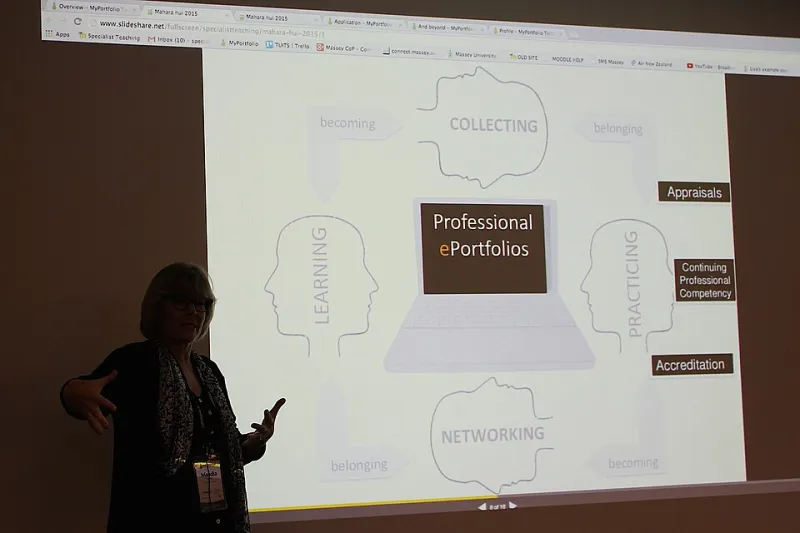
At the same time, the tools available to demonstrate real-world capability have multiplied. A software engineer's public code repository, a data analyst's interactive dashboard portfolio, a marketing strategist's documented campaign results, a product manager's published case study — each of these communicates something a transcript cannot: evidence of actual judgment applied to actual problems.
Hiring managers across technology, finance, consulting, and creative industries have increasingly reported that they spend more time reviewing work samples than reviewing academic histories. In fast-moving sectors, the question has shifted from Where did you study? to What have you shipped?
A Framework for Evaluating Credential Value
Before enrolling in any graduate program or pursuing a professional certification, apply the following four-question framework:
1. Does this credential gate access to a regulated role? Certain professions — medicine, law, licensed accounting — require formal qualifications by law. In these fields, credentials are non-negotiable. Outside of regulated industries, however, the gate-keeping function of degrees is largely social, not structural.
2. Will the network justify the cost? Some programs offer genuine access to alumni communities, mentors, and recruiting pipelines that are difficult to replicate independently. If a specific program connects you directly to decision-makers in your target industry, the investment may be defensible on network value alone, separate from the credential itself.
3. Can the same knowledge be acquired and demonstrated more efficiently? For skills that can be learned, practiced, and publicly documented — coding, data analysis, UX design, financial modeling, digital marketing — the time-to-competency through structured online learning combined with portfolio building is often shorter and far less expensive than a two-year graduate program.
4. What does your target employer actually examine? Research the hiring practices of organizations where you want to work. Review job postings carefully. Speak with people in those roles. If the companies you admire consistently prioritize GitHub repositories, design portfolios, writing samples, or project case studies over degree requirements, your development resources should follow that signal.
Case Studies: From Credential-Heavy to Portfolio-Driven
The Finance Professional Who Built in Public
Marcus had spent seven years in corporate finance, accumulating a CFA designation and a graduate certificate in financial analysis. Despite strong qualifications, his job applications consistently stalled at the interview stage. On the advice of a mentor, he began publishing detailed financial model breakdowns on LinkedIn — annotated walkthroughs of publicly available company filings, explained for a professional audience. Within four months, he received three inbound inquiries from hiring managers who had found his content. He accepted a senior analyst role at a fintech firm that had not yet posted the position publicly.
The Marketing Director Who Stopped Chasing Certifications
Adriana had accumulated six digital marketing certifications over three years, investing both money and significant time. Her resume was dense with credentials, yet she remained stuck in a mid-level role. She paused all formal coursework and instead dedicated that time to building a documented portfolio of campaign strategies — including one she executed pro bono for a nonprofit. The portfolio demonstrated strategic thinking, measurable outcomes, and a distinct professional voice. Her next job offer came with a 34 percent salary increase and a director-level title.
These are not anomalies. They reflect a broader pattern: when professionals redirect investment from credential accumulation toward proof-of-work development, the career returns are often faster and more substantial.
Building Proof-of-Work That Outperforms a Degree
The following steps provide a practical starting point for professionals ready to shift their strategy:
Audit your existing work for portfolio material. Most professionals have more demonstrable work than they recognize. Past projects, internal presentations, process improvements, and client outcomes can often be anonymized and reframed as portfolio assets.
Identify the three to five artifacts that matter most in your target role. Speak with people who hire for the positions you want. Ask what they review before extending an offer. Build toward those specific deliverables.
Create work in the open. Personal projects, freelance engagements, volunteer contributions, and open-source participation all generate public evidence of capability. Even a well-maintained professional blog that documents your thinking in your domain builds a visible body of work.
Treat every application as a portfolio submission. Rather than relying on a resume to carry the full persuasive load, link directly to relevant work samples. Make it effortless for a hiring manager to see what you have built before they decide whether to invest time in an interview.
The Balanced View
None of this suggests that credentials have no value. For early-career professionals establishing foundational knowledge, for those entering regulated fields, or for individuals whose target employers genuinely weight formal qualifications, degrees and certifications remain meaningful. The error is in treating them as universally sufficient — as a strategy that works regardless of industry, role level, or hiring context.
The most effective career development approach in 2025 is intentional and evidence-informed. It begins with understanding what the specific employers you want to work for actually value, and then building the most direct possible path toward demonstrating that value.
In many fields, that path now runs through a portfolio before it runs through a diploma. Recognizing that shift early is a competitive advantage. Acting on it is what separates professionals who advance from those who wait for credentials to do work they were never designed to do.